Popular Searches:
Recommended Posts



Search Results

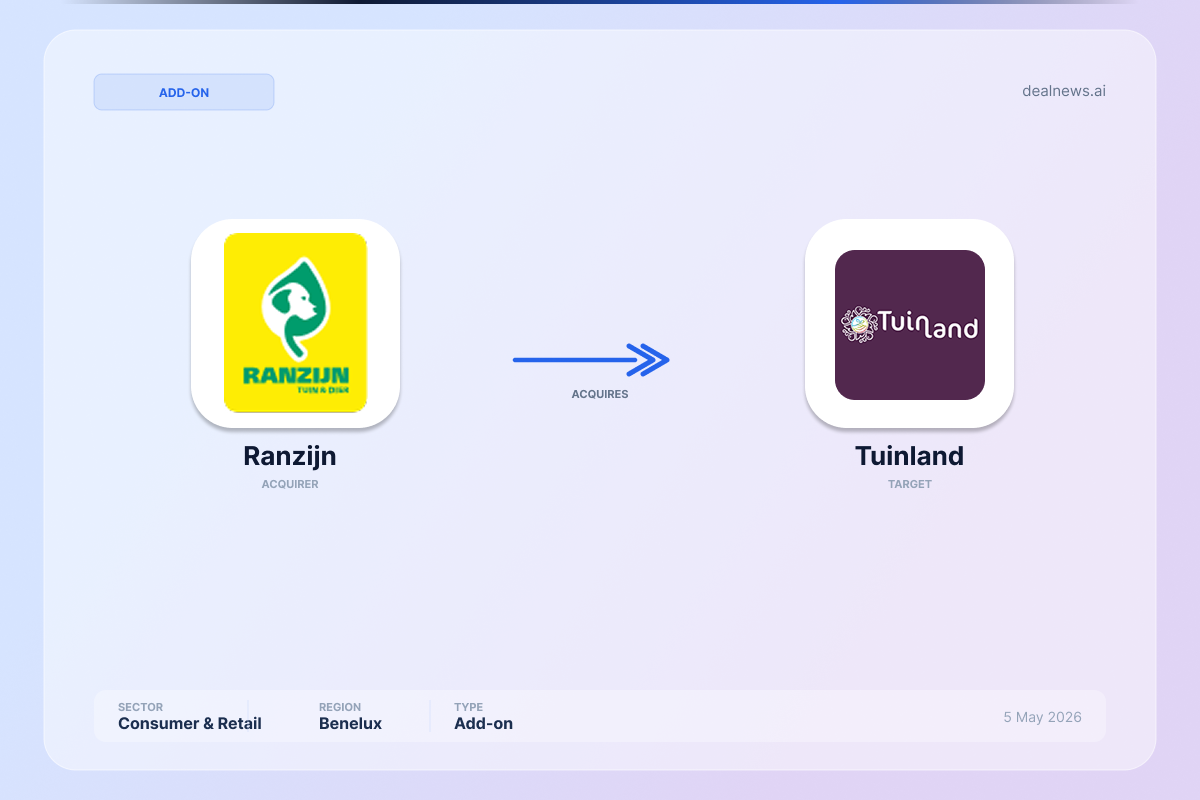
Ranzijn tuin & dier acquires four Tuinland stores, adding 220 employees and expanding in Northern Netherlands. Read about the strategic growth and plans.
Ranzijn tuin & dier has acquired the Tuinland garden center chain as of May 5, 2026, marking a significant step in its national expansion strategy. The deal includes four Tuinland stores located in Assen, Groningen, Zwolle, and Wilp, along with approximately 220 employees. Initially, these stores will continue operating under the Tuinland brand, with a gradual transition to the Ranzijn formula planned over the coming years.
The acquisition does not disclose financial terms but represents a full 100% stake transfer. Ranzijn plans to modernize and sustainably upgrade the acquired stores, starting with renovations in Zwolle and Groningen scheduled for completion by March 2027. The Assen and Wilp locations are expected to follow by March 2028. Integration efforts include centralized support from Ranzijn’s organization and the introduction of new veterinary clinics at select locations.
Founded in 1919, Tuinland began as a vegetable plant nursery and gained recognition in 1968 for pioneering a self-service retail concept. Over the decades, it has grown into a well-known garden center chain in Northern and Eastern Netherlands. Ranzijn tuin & dier, established in 1912, is a family-owned business combining garden centers, pet specialty retail, and veterinary services across the Netherlands.
The strategic rationale behind the acquisition centers on geographic expansion and service enhancement. By incorporating Tuinland’s locations, Ranzijn strengthens its presence in key Northern and Eastern Dutch markets. The company aims to leverage cross-selling opportunities between garden and pet product assortments and expand veterinary services to increase customer engagement. The retention of Tuinland’s extensive seasonal product lines, including a large Christmas collection, complements Ranzijn’s existing offerings.
Industry trends show increasing consolidation in the garden center and pet care retail sectors, with companies seeking scale and diversified services to meet evolving consumer demands. Ranzijn’s move positions it competitively against regional rivals, who may respond with their own acquisitions or service innovations.
Financial details such as deal value and multiples remain undisclosed. The acquisition is expected to generate cost synergies through centralized logistics, procurement efficiencies, and shared marketing efforts. Operationally, Ranzijn will standardize store formats and implement sustainability initiatives across the new locations.
Looking ahead, Ranzijn plans a phased integration approach to minimize disruption and retain Tuinland’s loyal customer base. The company will focus on aligning organizational cultures and integrating IT and supply chain systems. Regulatory approvals were not highlighted as a concern.
Overall, the acquisition reflects Ranzijn’s commitment to expanding its footprint and enhancing its product and service portfolio, reinforcing its position as a leading garden and pet care retailer in the Netherlands.