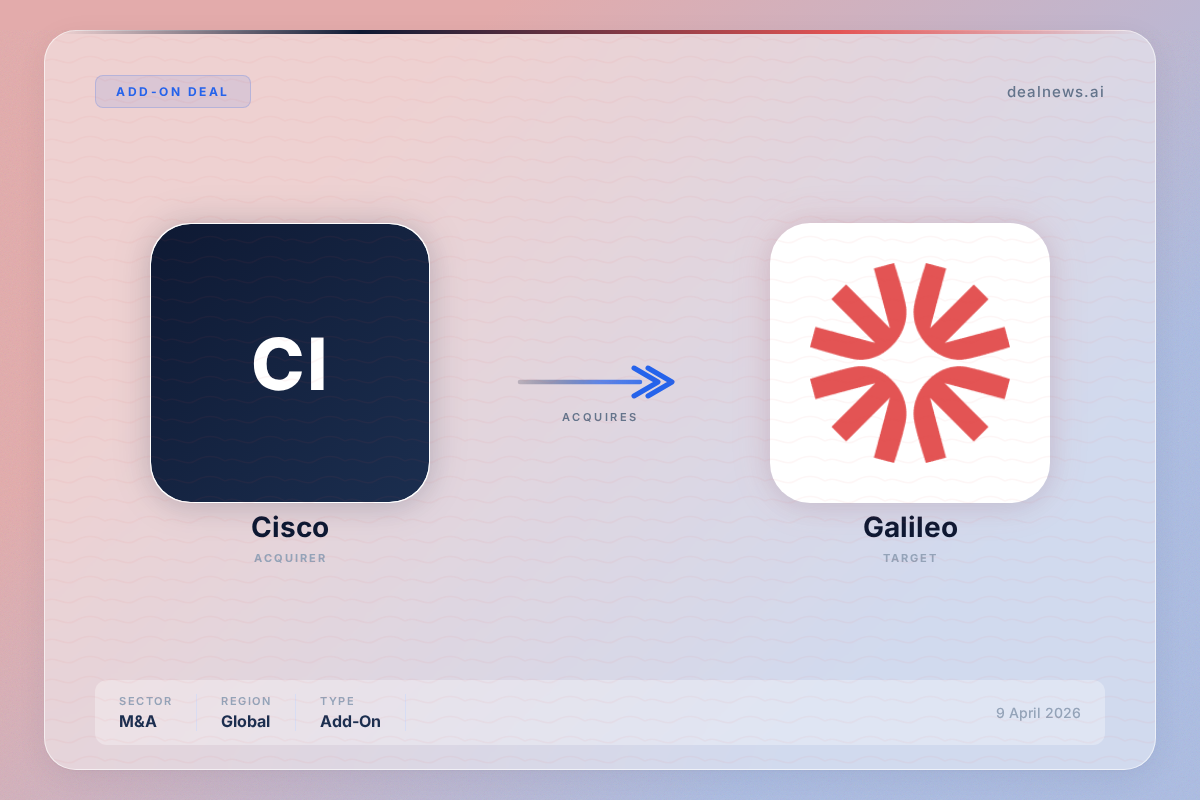
Cisco Systems Inc. has acquired Galileo, a startup specializing in artificial intelligence-native observability tools, to bolster the monitoring and trustworthiness of AI agents within its Splunk observability platform. The deal, announced on April 9, 2026, is expected to close by the end of the fourth quarter, though financial terms were not disclosed.
Galileo Technologies develops software that enables enterprises to observe and evaluate AI models in real time, particularly focusing on multiagent systems. Its platform applies guardrails to ensure AI outputs are accurate and reliable, addressing a critical challenge in AI deployment. Over recent years, Galileo’s tools have gained traction among enterprises seeking to build trust in AI-driven workflows.
Kamal Hathi, senior vice president and general manager of Splunk at Cisco, emphasized the strategic importance of the acquisition. In a company blog post, he noted that Galileo’s platform was designed to solve the trust deficit in AI by providing teams with tools to evaluate AI quality, detect failures before they impact users, and continuously improve AI behavior in production. Integrating these capabilities into Splunk will enhance real-time visibility into AI agent actions and strengthen security throughout the agent development lifecycle.
Galileo offers a unified platform that supports every stage of AI agent development—from prompt optimization and model selection to evaluation, production monitoring, and enforcement of operational guardrails. This comprehensive approach aligns with Cisco’s goal to make observability a core pillar of AI development rather than a supplementary feature.
The acquisition builds on prior collaboration between Cisco and Galileo. Approximately a year ago, both companies joined the AGNTCY consortium, which aims to establish open-source standards and reference architectures for trustworthy AI agents. Galileo’s security and observability tools, combined with orchestration capabilities from LangChain, form key components of this initiative.
Cisco has been positioning itself as a security layer for AI agents, recently unveiling its Duo Agentic Identity solution to help enterprises discover, identify, and monitor AI agents within their systems. The company also plans to expand its AI Defense platform to cover AI agents, reflecting growing concerns about the unpredictable behavior of agentic applications.
According to Hathi, AI agents can produce unexpected, inaccurate, or harmful outputs, which can erode customer trust and increase operational costs. He stressed that observability must extend beyond traditional metrics like latency and errors to include detection of hallucinations, bias, security risks, and cost tracking to ensure clear return on investment.
Cisco President and Chief Product Officer Jeetu Patel highlighted these risks during the RSAC 2026 conference, comparing AI agents to teenagers—intelligent but prone to reckless behavior without fear of consequences. He underscored the importance of trusted delegation in AI to avoid costly failures and maintain market leadership.
Industry analyst Holger Mueller of Constellation Research commented that AI fundamentally changes enterprise observability requirements. He noted that existing tools require upgrades to effectively monitor unsupervised AI agents, and Cisco’s acquisition of Galileo is a step toward addressing this gap. Mueller also pointed out that customers will seek clarity on Cisco’s integration plans, product roadmap, and pricing post-acquisition.
Galileo’s platform and services will continue to operate independently until the transaction is finalized. Cisco has not disclosed specific plans for existing Galileo customers following the deal’s closure.
This acquisition strengthens Cisco’s position in the emerging AI observability market, enhancing Splunk’s competitive edge in enterprise AI operations management. The integration aims to drive adoption of Splunk’s platform by offering differentiated AI trust features, while reducing deployment risks for enterprise clients. However, Cisco faces challenges in seamlessly integrating Galileo’s technology and aligning development teams without disrupting customer service.
As AI observability becomes a critical enterprise need, this deal may accelerate consolidation and innovation within the sector, prompting competitors to enhance their AI monitoring capabilities or pursue strategic partnerships.
Looking ahead, Cisco plans to leverage Galileo’s technology to deliver deeper insights and more secure AI agent management, supporting enterprises as they navigate the complexities of deploying trustworthy AI at scale.